“ICT resilience is Europe’s new competitiveness frontier. The report highlights Europe’s unique opportunity to take the lead in this strategic domain, through ‘resilience-by-design’, quality based procurement, interoperable standards and investment in skills. Consulting engineers stand ready to work with policymakers and the industry to build a digital ecosystem that is strong, secure, and a driver of long-term value for all,” says Inés Ferguson, President of EFCA, on the launch of a new report examining the resilience of Europe’s Information and Communication Technology (ICT) sector. The European Federation of Engineering Consultancy Associations (EFCA), through the report, warns that growing cyber, geopolitical and climate-related risks threaten the digital backbone of Europe’s economy and society.
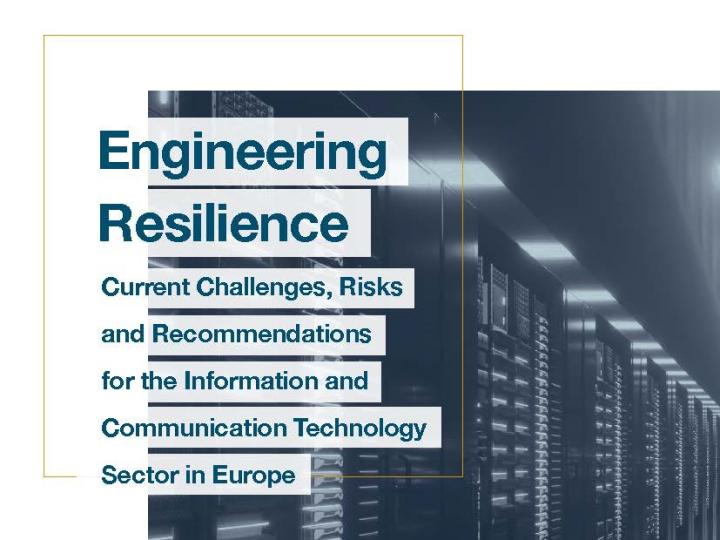
The report “Engineering Resilience: Current Challenges, Risks and Recommendations for the ICT Sector in Europe” was developed by EFCA’s Future Trends Committee in cooperation with the University of Marburg. It provides an in-depth analysis of the current state of the European ICT sector, identifies key vulnerabilities in digital infrastructure and supply chains, and outlines practical pathways to strengthen resilience across an increasingly interconnected system of critical infrastructures.
As ICT underpins essential services such as energy, transport, water, finance and healthcare, disruptions in digital systems can quickly cascade across sectors and borders. The report highlights how ageing infrastructure, skills shortages, market fragmentation and strategic dependence on non-European providers are compounding Europe’s exposure to both natural and man-made threats.
The study emphasises that resilience must be built into ICT systems from the earliest stages of planning and design, rather than reinforced after incidents occur. Consulting engineers are identified as key actors in delivering this shift, by integrating cyber, physical and climate resilience into system architecture and by supporting more robust, adaptable and future-proof infrastructure. “Resilient ICT is a force multiplier for critical infrastructure. Engineer it right, and everything connected to it becomes more resilient,” says Jeffrey Seeck, Chair of EFCA’s Future Trends Committee.
Alongside recommendations for the engineering community, the report calls on EU and national policymakers to support long-term investment in ICT infrastructure, ensure coherent implementation of existing resilience and cybersecurity legislation, and create a regulatory and procurement environment that rewards quality, innovation and resilience.
The report is one of a series of reports from the Future Trends committee and is intended to contribute to ongoing dialogue with European and national decision-makers.
Press contact: Sue Arundale, Director General
EDITOR’S NOTE: EFCA has member associations in 27 countries and is the sole European federation representing the business interests of professional engineering consultancy and related services, a sector that employs more than one million staff in Europe.